
From Purees to Table Foods: A Food Progression Guide by Age
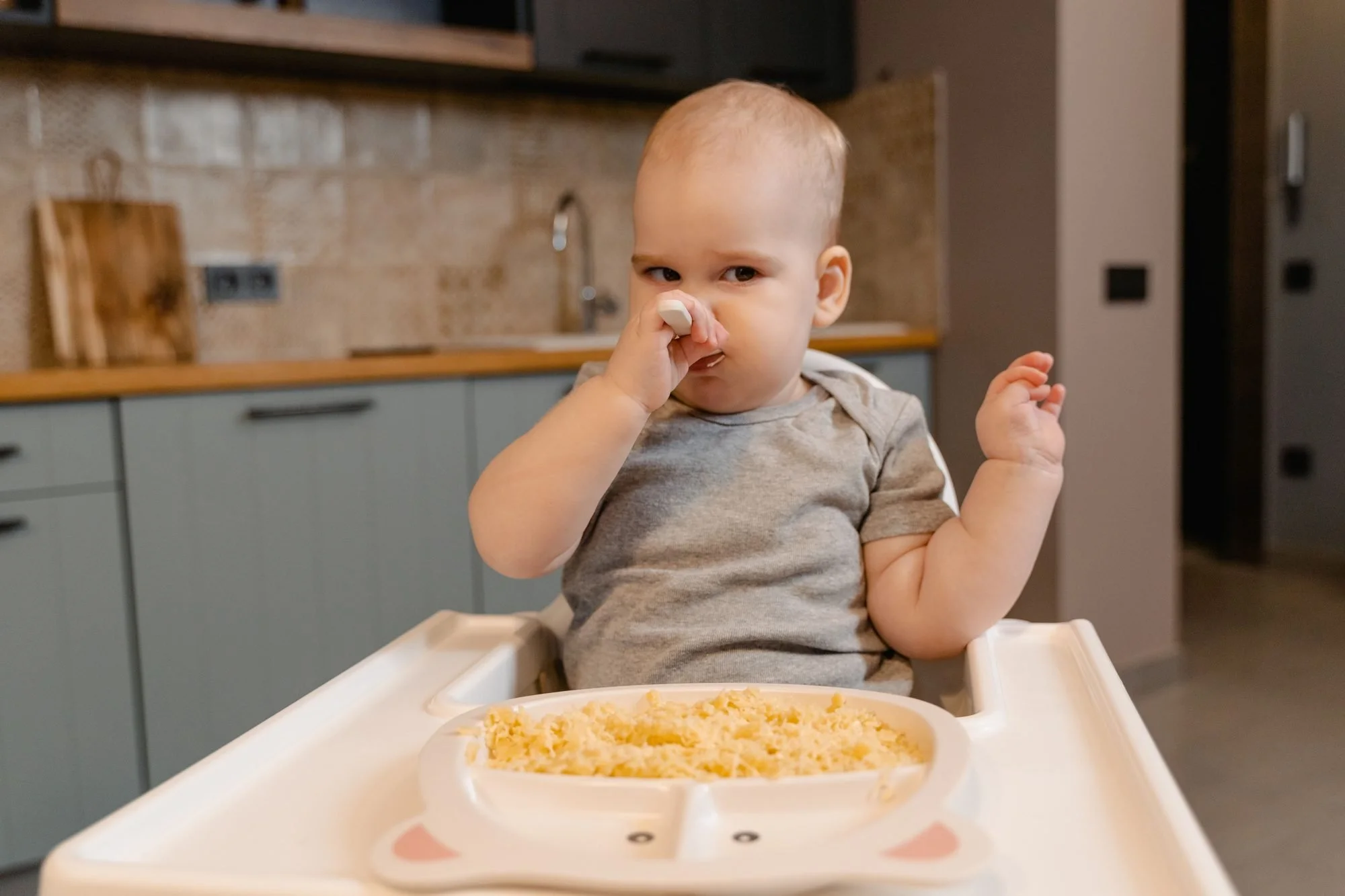
We have tried to take some of the guesswork out of feeding your infant or toddler. We have compiled a list of suggested foods and the skills necessary for successful eating and safe swallowing. We have also given an age when most children are able to master the foods.
Remember to have fun and allow your child to learn about and explore the foods as they progress through the feeding development. If you have any concerns or your child is not progressing to age appropriate foods, please ask your physician for a referral.
4–6 Months: Purees
First foods presented with a spoon. Allow 3 days before introducing a new food to rule out an allergy.
Your child should open his mouth to make spoon placement easy. There should be a “place” for the spoon on his middle tongue. Soon his top lip should help clean the spoon and limit the amount of food pushed out with his tongue. Feeding should be enjoyable for you and your child.
7–9 Months
Dissolvable ‘Crunchy’ Solids
Dissolvable or meltable crunchy solids are foods that soften quickly with saliva and then break apart easily with gumming or chewing on the lateral biting surface (gums or teeth). These foods encourage lateral munching.
Be concerned if your child is sucking or not trying to chew. If your child is choking, gagging, vomiting or refusing this texture, please consult with your feeding specialist or ask for a referral.
* indicates Milk Free
Graham crackers
Veggie Booty*
Cheetos
Gerber puffed cereal snacks*
Veggie Stix
Fruit Booty
Club crackers
Gerber Wheels
Butter cookies
Wafer cookies
Tings*
Pirate’s Booty
Puree with Texture
Puree and small chunks of soft textured foods. Make sure your child can feel the texture, transfer it to the biting surfaces and attempts to chew.
Discuss with your pediatrician if your baby has difficulty with the mixed texture, gags or chokes, swallows the textures without trying to chew or spits out the textures. Your child most likely would benefit from a feeding evaluation and therapy to help her learn to chew her foods.
Stage 3 foods
Oatmeal with bananas or other fruit
Fork mashed fruits or vegetables
9–12 Months
Soft Chewables
This category of food is soft in the center but has a textured surface or coating, giving adequate input to sustain consecutive chewing. These textures are only for children attempting to chew, otherwise choking, gagging or swallowing without chewing (whole) may result.
Fish sticks
Waffles
French toast sticks
Pop-Tarts
Fig Newtons
Tater tots
Cereal bars/squares
Toast or toast with spreads
Frozen potato “Smileys” – found in frozen foods of grocery stores
Soft Solids
These foods are only for children who demonstrate consistent sustained chewing (open mouth lateral munching). They are not appropriate for children who swallow food whole or incompletely manipulate foods. They can cause choking or obstruction because they can easily “slide” down and be swallowed whole.
Soft cold cuts
Bananas
Cooked beans
Strips of processed cheese
Papayas
Chicken nuggets
Cheese cubes
Avocados
Blueberries
Soft vegetable cubes
Scrambled eggs
Rice or noodles
Foods to Avoid
Because of the high risk of choking, these foods are not recommended.
Popcorn
Grapes
Nuts
Hard candies
Hot dogs
Having Trouble with These Transitions?
If your child is having difficulty with any of these transitions, it is always best to promptly address the issues to reduce the risk of further delays, sensitivities or behavioral problems. Early intervention is always best.
We would be happy to discuss any of these issues with you. If you are worried about these feeding milestones, please ask your pediatrician for a referral.